Bedding & Better Sleep
How Wool Comforters Balance Warmth and Moisture
A cozy bed should feel comforting, not like a personal sauna. Wool comforters are valued for combining insulating warmth with breathability, but the experience depends on more than the fiber alone. Fill weight, shell fabric, construction, room conditions and care all help determine whether a comforter feels just right.
The appeal of a warmer bed that can still breathe
There is a particular pleasure in pulling up a comforter on a chilly evening. There is less pleasure in waking up overheated, kicking the covers away, then reaching for them again an hour later. For people who move between those two extremes overnight, wool bedding can sound appealing: it is associated with warmth, airflow and moisture management rather than simply piling on insulation.
Those qualities come from wool’s natural structure. Wool fibers are springy and crimped, creating spaces that can hold still air. Because trapped air slows the movement of heat, the fiber can help create an insulating layer. At the same time, a wool fill is not necessarily a dense, sealed blanket. How air circulates through the comforter depends on the fill, its distribution, the outer shell and the way the item is stitched.
Wool can also absorb water vapor within the fiber before the material feels wet to the touch. That can help manage some of the moisture released by the body during sleep. It does not mean a comforter makes a humid room dry, prevents sweating or replaces a comfortable bedroom environment. Rather, wool’s moisture behavior is one part of a larger set of conditions that shape how warm and dry the bed feels.
That distinction matters. No comforter can guarantee a particular sleep temperature for every person, every bedroom or every season. A hot sleeper in a warm, humid room may have different needs from someone who feels cold in a drafty space. The goal is not to find a magical material, but to understand what its characteristics may contribute.
How wool helps manage warmth
Wool’s insulating effect is often explained through the air held between fibers. The fiber’s natural crimp gives the fill loft and creates small pockets that slow heat loss. This can make a wool comforter feel warm without requiring an especially heavy, compact layer. How much warmth it provides, however, depends on the amount and arrangement of the fill, as well as the construction of the comforter.
Think of the fiber as one ingredient in a recipe. A comforter’s overall feel comes from the recipe, not the ingredient in isolation. A higher fill weight may feel warmer or more substantial, while a lighter fill may suit milder rooms or people who prefer less coverage. But weight alone does not tell the whole story: a comforter’s dimensions, shell, stitching, loft, and the bedding layered beneath it also influence how it feels.
Wool is often described as temperature regulating because it can provide insulation while also allowing moisture vapor to move through or be absorbed by the fiber. That description should not be confused with active temperature control. Wool does not sense whether a sleeper is warm and switch itself into a cooler setting. Instead, its natural characteristics may contribute to a more balanced-feeling sleep surface under suitable conditions.
Room temperature remains a major part of the equation. A heavy comforter in a well-heated bedroom can feel too warm, even if its fill is breathable. In a cool room, that same layer may feel inviting. Pajamas, sheets, mattress materials, humidity and personal comfort preferences all play a role. If your sleep temperature varies with the season, a removable cover or adjustable layering system may make it easier to change the setup without replacing the entire bed.
Moisture management: what it means in everyday use
People lose moisture while they sleep, and perspiration can become more noticeable when a bed traps heat or when the room feels warm. Wool fibers can take up some water vapor, which is one reason wool bedding is commonly associated with moisture management. That characteristic may help the comforter feel less clammy than a layer that holds moisture at its surface, although the result depends on the sleeper and the surrounding conditions.
Absorbing moisture is not the same as removing it from the room. The fiber holds moisture temporarily; ventilation, room humidity and the comforter’s ability to dry out still matter. If a bedroom is persistently damp, if bedding is left wet, or if the sleeper is sweating heavily, no natural fiber can make those underlying issues disappear. Regularly airing bedding and keeping the room comfortable can support a fresher sleep environment.
Wool’s moisture-related benefits are also not a treatment for night sweats or a medical solution for sleep problems. Persistent or unexplained nighttime sweating can have many causes, and it is worth discussing with a qualified healthcare professional, especially when it is new or accompanied by other symptoms. Bedding can contribute to comfort, but it cannot diagnose or treat a health condition.
For everyday comfort, consider the entire bedding stack. Breathable sheets, light sleepwear and a room with suitable airflow may work together with a wool comforter. If you already wake up too warm, adding a naturally breathable fill while keeping a very heavy duvet cover and several insulating blankets may not solve the problem. Small adjustments—such as removing a layer or changing the room temperature—can be more revealing than making several big changes at once.
Lightweight or heavier: choosing a feel that fits
Fill weight is one of the most useful details to compare when choosing a wool comforter. It describes how much filling is used, but manufacturers may present that information in different ways. Some list total fill weight; others give a weight per square yard or a similar measure. Compare like with like, and check the size of the comforter: a larger item can contain more total fill while still having a relatively light fill density.
A lightweight design may suit warm bedrooms, people who tend to sleep hot, or anyone who prefers a cover that feels less substantial. It can also be a practical choice for transitional weather, when a winter-weight comforter would be too much but a sheet alone does not feel cozy. Lightweight does not necessarily mean cool in every situation; room temperature and bedding layers still matter.
A heavier design may be a better match for a colder room or for someone who likes the sensation of fuller coverage. It can provide more insulation, but that extra warmth may be unwelcome in a heated bedroom or for a sleeper who already tends to overheat. When two people share a bed and prefer noticeably different temperatures, separate blankets or a layered setup can offer more flexibility than trying to find one compromise comforter.
For year-round use, consider how much your bedroom changes with the seasons. In a mild climate, one mid-weight comforter may work across much of the year. Where winters are cold and summers warm, a lighter option may be useful in warmer months, with another layer added when temperatures fall. A removable duvet cover makes laundering the sleep surface simpler, while layers let you adjust warmth without asking one comforter to do every job.
When product information provides a stated fill weight, use it as a comparison point—not a promise of a precise sleep temperature. Personal warmth, room conditions, mattress type and other bedding all affect the outcome. If possible, check the dimensions, construction, return terms and care guidance before deciding. Those details can be more useful than a broad label such as “all season,” which does not mean the same thing in every home.
Why shell fabric and quilting matter
The outer shell is the fabric enclosure around the filling. Its feel against the body, weave, weight and breathability influence the finished comforter. Cotton is a common shell material and may provide a familiar, breathable surface. A tightly woven shell can help contain the fill, while a softer or smoother fabric can change the way the comforter drapes. The shell also affects laundering and durability, so it is worth reading its material and care details rather than focusing on the filling alone.
Construction determines how well the filling stays distributed. Quilting, stitching, tufting or other securing methods help limit shifting and bunching. Without suitable construction, filling may migrate toward edges or gather in sections, leaving other areas thinner. A stable fill can help keep the comforter’s warmth more consistent across its surface and may make the bed easier to arrange.
Look at the stitching pattern and the product description. Some designs use sewn-through quilting, while others use hand-tufting or perimeter stitching. There is no single method that is best for everyone; the important questions are whether the filling is held securely, whether the comforter’s design suits the intended use, and whether the manufacturer explains how to care for it.
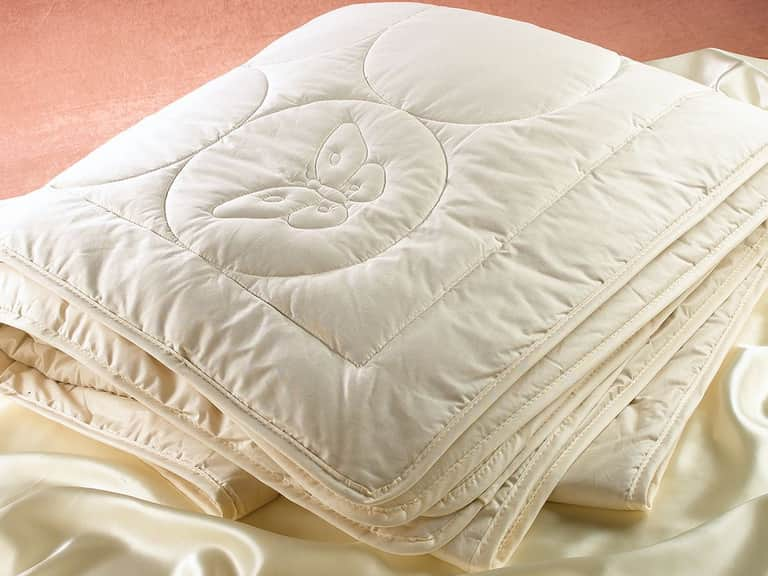
Fiber blends can change the feel, too. An alpaca-and-wool comforter, for example, combines wool batting with alpaca fiber. A crescent-moon stitch is used to keep the filling evenly distributed. Its organic cotton casing provides an additional material to consider when assessing feel and maintenance. This type of blend may be worth exploring for someone interested in natural fibers and a warmer, more substantial bedding layer, though individual comfort still depends on the full sleep setup.
You can read more about the construction and materials of the Alpaca and Wool Comforter. Its description lists organic alpaca fiber and wool batting inside a GOTS-certified organic cotton casing, with stitching intended to help keep the filling in place. As with any bedding, review the manufacturer’s care instructions and make sure the expected warmth and maintenance suit your household.
Care: protect the fibers and follow the label
Wool comforters are not all cared for in the same way. Some may be washable under specified conditions; others require spot cleaning, professional cleaning or limited maintenance. The product label is the authority for a particular item. Do not assume that a comforter is machine washable because another wool comforter is—or that airing it outdoors replaces the care instructions.
A removable duvet cover can help protect the comforter from body oils, dust and everyday spills. Washing the cover is generally more straightforward than cleaning the filled comforter, but check the cover’s own label as well. Using a cover may reduce how often the comforter needs cleaning, which can be helpful when the filling requires special handling.
When the care guidance allows it, airing bedding can help it feel refreshed. Choose a dry, well-ventilated place and follow any instructions about sunlight or heat. Avoid storing a comforter while it is damp, and make sure it is fully dry before returning it to a duvet cover or putting it away. Excess moisture can undermine freshness and may damage textiles, regardless of the fill.
For spot cleaning, use only the method recommended by the manufacturer. Aggressive rubbing, harsh chemicals, high heat or an unsuitable wash cycle can affect the shell or the fill. If a care label is unclear, ask the maker or a qualified cleaner before proceeding. A little caution is less dramatic than rescuing a comforter that has shrunk, felted or lost its shape.
Storage matters, too. Keep the comforter clean and completely dry before storing it, and choose a breathable storage option rather than compressing it tightly for a long period. Follow product-specific directions about folding or storing, since construction and fill can differ. Good care does not make bedding indestructible, but it can help preserve its shape and make routine use easier.
Is wool a suitable choice for you?
A wool comforter may be worth considering if you want insulation with a breathable feel, prefer natural fibers, or are looking for a fill associated with moisture absorption. It may also appeal if you want to adjust warmth through fill weight and layering rather than rely on a single thick blanket. The key is matching its practical details to your habits and room—not choosing based on a promise that any material will work for every sleeper.
It may be less suitable if you need a comforter that can be washed frequently without special instructions, if you are sensitive to wool or animal fibers, or if the available options feel too warm for your bedroom. Wool products vary, and a cotton casing does not change the nature of the fill inside. If you have known allergies or sensitivities, review the full fiber composition and consult a healthcare professional when appropriate.
Consider practical questions before making a choice:
- Does the comforter list the fill material and a meaningful fill-weight measurement?
- Is the stated warmth appropriate for your bedroom and your usual sleep temperature?
- What is the shell made from, and how does it feel against the skin?
- How is the filling secured, and is the construction explained clearly?
- Can you protect it with a duvet cover, and do you understand the cleaning instructions?
- Would seasonal layers or separate blankets help if you share a bed with someone who prefers a different temperature?
These questions turn “Is wool good?” into a more useful one: “Does this particular wool comforter fit my sleep environment and care routine?” That shift is small but powerful. A fiber can have appealing properties and still be the wrong choice for a given bedroom if the fill is too heavy, the cover is difficult to maintain or the sleeper simply prefers a lighter touch.
A simple way to compare options
Start with your own experience. Do you wake up cold, warm or comfortable? Does your room stay close to the same temperature throughout the year, or swing dramatically with the seasons? Do you sleep alone or share covers with someone whose preferences differ? Jotting down a few nights of observations can help separate a persistent pattern from one unusually warm evening.
Next, compare comforters using the same set of criteria: fiber content, fill weight, shell material, size, construction and care requirements. If one description says “lightweight” and another provides fill weight, the terms are not directly comparable. Look for specific measurements and clear explanations. When information is missing, avoid filling in the gaps with assumptions.
Finally, think about the rest of the bed. A comforter is only one layer. If you choose wool to support a more balanced feel, pairing it with breathable sheets and an appropriate room temperature may make more sense than adding multiple heavy layers. If you are still too warm, changing the fill weight or removing a layer may be more effective than expecting the material to cancel out excess insulation.
The takeaway: balanced comfort is built, not promised
Wool comforters can offer an appealing combination of insulation and moisture absorption. Their crimped fibers help hold air, while the material’s ability to absorb some water vapor contributes to its reputation for breathable comfort. These are useful characteristics, not guarantees: the amount of warmth and the way the bed feels also depend on fill weight, shell fabric, stitching, room conditions and the sleeper.
For a confident choice, look past the general label and examine the details. Choose a weight that matches your climate and habits, check that the fill is secured in a way you understand, and make sure the care routine is realistic for your home. Add a washable cover when appropriate, and use layers to adapt as the weather changes.
The best bedding is not necessarily the heaviest or the most elaborate. It is the setup that lets you settle in without spending the night negotiating with your covers. Wool may be one useful route to that balance—especially when the comforter’s construction, care and warmth are a thoughtful match for the person sleeping beneath it.